
Rule of thumb: if the door still moves smoothly and closes flat without fighting you, the door panel itself is probably fine — it's the safety hardware around it from that era that almost certainly needs attention.
The exceptions: a door panel with rust working through the bottom sections, a track that's bent or undersized for the door's weight, or a door that was never built with hurricane wind-load bracing in mind. Those are structural issues, not just "old," and they don't get better with time in a climate this humid.
The Non-Negotiable Safety Retrofits
These aren't optional upgrades for people who like new gadgets. They're the items that cause actual injuries, and they're the ones worth winning the argument over.
- Auto-reverse photo-eye sensors. Openers made before 1993 were not required to have the two small photo-eye sensors mounted near the floor on each side of the track. If your opener doesn't have them, the door has no way of knowing a kid, pet, or bike is in its path before it closes on them. There's no retrofit kit for an opener that predates this — the opener itself needs to be replaced.
- Spring containment cables. Older extension spring setups (the long springs that stretch along the horizontal tracks) are notorious for becoming projectiles when they fail, because nothing holds the broken pieces in place. A safety cable run through the center of each spring costs little and prevents a snapped spring from launching across the garage. If your door has exposed extension springs with no cable through the middle, that's a same-day fix, not a someday fix.
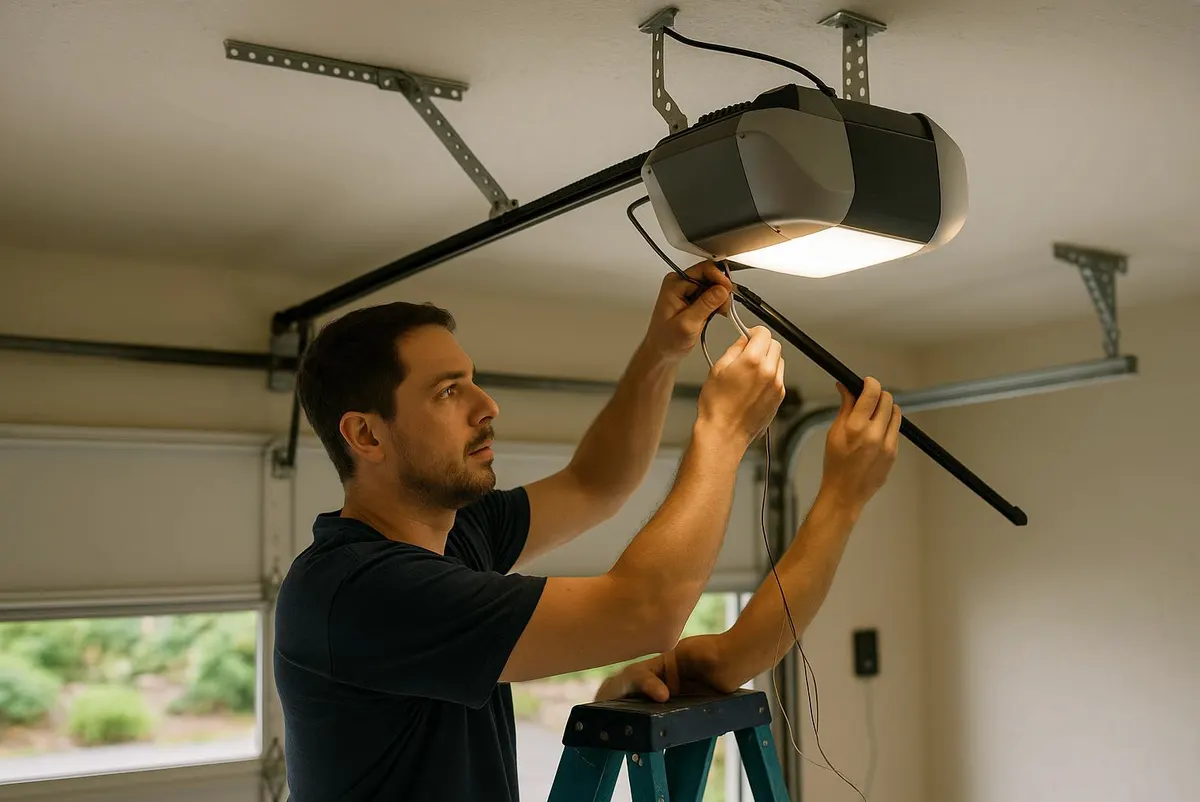
- Exposed wiring at the wall button or opener head. Decades-old low-voltage wiring that's frayed, spliced with electrical tape, or running loose across the garage floor should be replaced. In a space that gets humid swings and the occasional water intrusion during afternoon downpours, degraded insulation is a real risk, not a cosmetic one.
What's Genuinely Fine to Leave Alone
This is the half of the argument that often gets lost because "it's from the 90s" sounds alarming on its own.
- A heavy, solid door that still operates smoothly. Older steel and wood doors were often built with thicker gauge material than a lot of today's budget options. If the panels are straight, the paint is just faded, and there's no rust-through, replacing it for age alone is money spent on nothing.
- A manual slide lock or latch bar. These were common before automatic openers became standard. They're not a hazard by themselves — they only become a problem if someone forgets one is engaged and tries to run the opener against it, which can bend the track or strip the opener's gears. The fix here is a conversation, not a renovation: make sure everyone in the house knows it's there and leaves it disengaged once an opener is installed.
- Original torsion springs that are inspected and balanced correctly. Springs have a cycle life, and plenty of older ones are overdue regardless of how they look. But a spring that's been checked and is still within its service life doesn't need to be swapped out just because the rest of the system is old.
The Part That's Specific to This Climate
Garage doors installed decades ago in this area weren't built around the wind-load standards that exist now, and that matters more here than in most of the country. If your door has never been reinforced with horizontal struts or rated hardware, it's worth having that assessed before the next storm season, not during it. Salt-laden air and recurring humidity also do specific damage that's easy to miss: rust tends to start at the bottom panel seams and around roller brackets, areas that stay damp longer after a downpour and don't fully dry out between storms. Steel rollers from the 90s are especially prone to this — they rust, bind, and drag against the track, which adds strain to the opener motor and can eventually warp the track itself. Swapping old steel rollers for sealed nylon ones is a low-cost fix that can be done without touching the rest of the door, and it quiets things down considerably in the process.
If you're the one in the house arguing for "let's just replace the whole thing," the honest answer is usually no — not if the panel and track are sound. If you're the one arguing "it's worked fine for thirty years, leave it," the honest answer is that the opener's safety sensors and the spring containment system are not up for debate. Everything else is a judgment call based on condition, not age.
When to Call Miami Springs Overhead Door Co
If you've got a pre-1993 opener with no visible photo-eye sensors, exposed extension springs with no containment cable, or rust creeping along the bottom panel seams, those are the three things worth a service call sooner rather than later. We handle Garage Door Opener Installation for households replacing outdated units that lack modern auto-reverse protection, and Cable & Roller Replacement for doors where age has caught up with the hardware but not the panel itself. We'll walk the door with you, point out what's cosmetic versus what's a real risk, and give you a straight answer instead of a sales pitch either way.
If you're trying to settle this argument at your own house, give Miami Springs Overhead Door Co a call. We serve Miami Springs, Hialeah, Doral, Miami Lakes, and the surrounding areas, and we can usually get someone out the same week to take a look.