
The One-Sentence Rule, and Why It Doesn't Always Hold
As a rule of thumb, a garage door spring that's more than seven years old or has gone through somewhere around 10,000 open-close cycles should be treated as living on borrowed time. But that estimate assumes a dry garage in a temperate climate with light daily use, which isn't what most Miami Springs homeowners actually have. Humid air works metal harder than dry air does, salt carried in off the coast speeds up corrosion on any exposed spring coil, and a two-car household opening the door six or eight times a day burns through cycles faster than the average. A spring rated for ten years of 'normal' use might only give you six or seven here, and a spring that looks fine on the calendar can already be failing underneath. That's why age alone isn't a reliable test — you need to actually look and listen.
Walk the Garage: What to Check and What It Means
Close the door, kill the opener if you can, and go through this list item by item. You don't need tools for most of it.
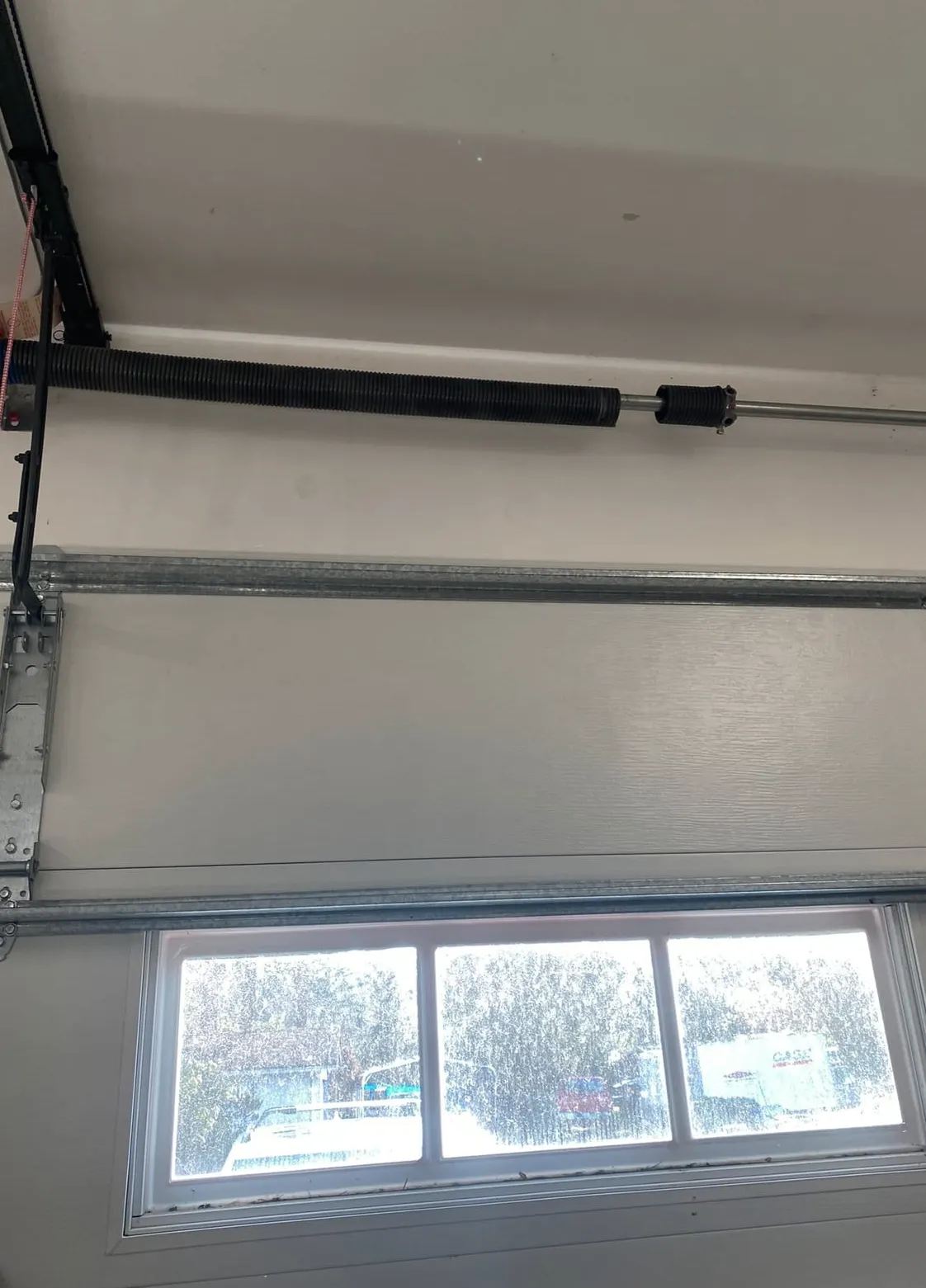
- Gap in a torsion spring's coils. With the door closed, look at the spring (or springs) mounted horizontally above the door on a metal shaft. A visible gap between coils, or coils that look unevenly spaced, means the spring has lost tension and is no longer sharing the door's weight properly. This is one of the clearest pre-failure signs there is.
- Rust or flaking on the coils. Light surface rust is common in this climate and not automatically a problem, but rust that's flaking off, pitting the metal, or built up in the gaps between coils is a different story. Corroded spots are weak spots, and a spring under constant tension will often snap right at the rusted section first.
- Stretched-looking extension springs. If your door uses extension springs (mounted along the horizontal tracks above the door rather than a shaft), stretch them visually against their resting length. A spring that looks permanently elongated, even with the door closed, has lost elasticity and is close to the end of its life.
- Loud bangs, pops, or grinding when the door moves. A healthy spring system runs with a smooth, mechanical whir. Popping or banging sounds usually mean coils are rubbing against each other unevenly, or the spring is flexing in a way it wasn't built for.
- The door looks crooked going up or down. If one side of the door rises faster than the other, or the whole panel tilts visibly as it moves, one spring is likely carrying more load than its partner — a sign that one has already weakened.
- The door drops or jerks partway through a cycle. A sudden sag, hesitation, or a visible jump in the door's motion usually means a spring is no longer providing consistent counterbalance. This is a late-stage warning, not an early one.
- The opener motor sounds strained. If the opener is laboring, running longer than usual, or making a higher-pitched whine to lift the door, it's compensating for a spring that isn't doing its share of the lifting. Left alone, this shortens the life of the opener too.
- Fraying or slack in the lift cables. Cables work directly with the springs, so check them while you're at it. Frayed strands, visible slack, or a cable that's jumped off its pulley often shows up around the same time a spring is weakening, since the extra strain gets passed along.
- Heavier panels from moisture swelling. Wood and composite doors that have absorbed humidity over the rainy season can gain real weight, which puts extra load on springs that were sized for a drier, lighter door. If your door feels noticeably heavier to lift by hand than it used to, the spring may be under-sized for current conditions, not just worn out.
The Hand-Lift Test
With the opener disconnected, lift the door manually about halfway and let go. A properly balanced door with healthy springs will stay roughly in place. If it drops, that's a strong, simple sign the springs are no longer holding their tension — treat it as confirmation of anything else on this list you've already noticed.
When to Call Miami Springs Overhead Door Co
If you've checked even two or three items on this list and they match what you're seeing, don't wait for the snap — a spring that lets go under tension can damage the door, the opener, or worse. Miami Springs Overhead Door Co handles Garage Door Spring Repair for both torsion and extension systems, and we'll check cables and rollers at the same time since Cable & Roller Replacement is often needed alongside spring work, especially on doors that have seen a full rainy season of humidity and heavier daily use.
If you're noticing any of these warning signs on your garage door in Miami Springs, Hialeah, Doral, Miami Lakes, or the surrounding area, call Miami Springs Overhead Door Co for a same day inspection before a worn spring turns into an emergency repair.