
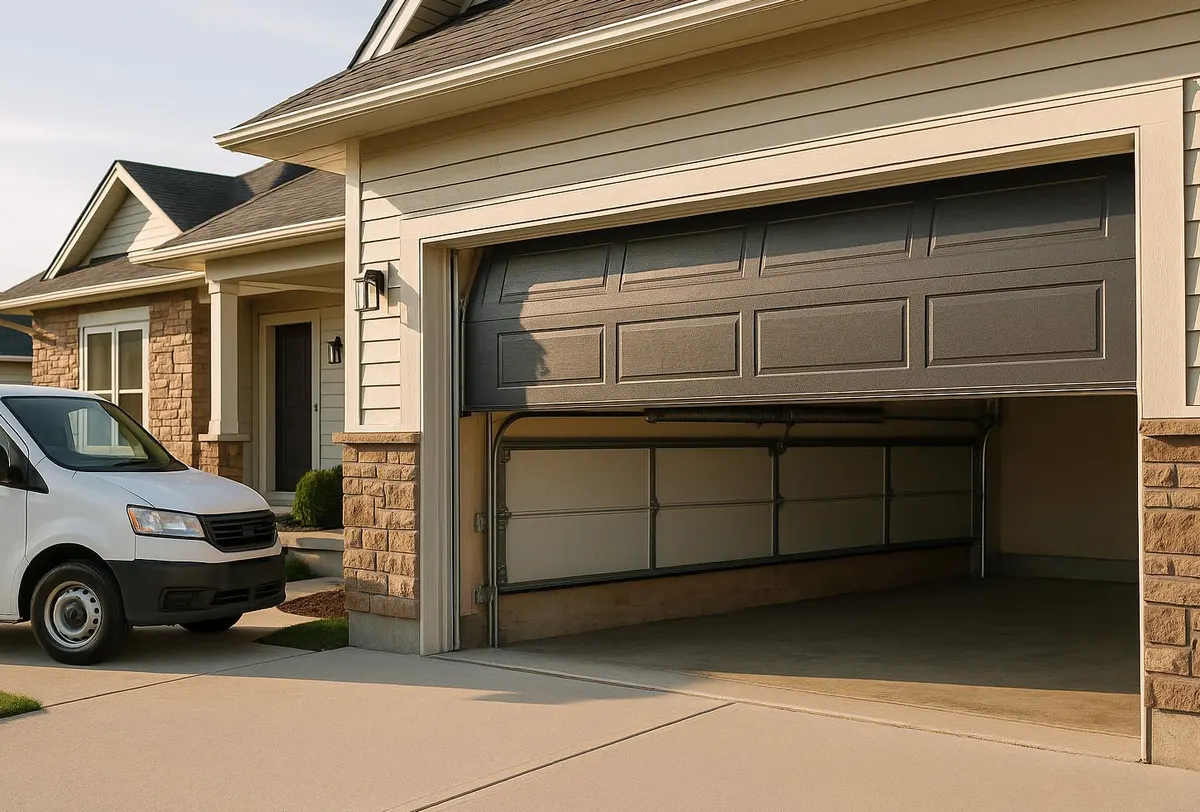
The short answer: your garage door is the biggest, weakest panel on your house
If wind gets behind your garage door, it can blow the door inward, and once that happens, pressure builds up inside the garage with nowhere to go. That pressure pushes up on the roof and out on the walls from the inside, which is how a single failed garage door turns into much bigger structural damage. A standard wood-frame wall is small, braced, and backed by studs. A garage door is a single wide panel, often 16 feet across, hung on tracks and held by springs and rollers that were sized for lifting the door, not for resisting a sustained lateral push from a storm. That is why it is usually the first thing to go.
Why this matters more here than in most places
South Florida's storm season is not an abstract risk. The humidity and afternoon downpours that build through the summer and into fall mean garage door hardware spends months in moist air, and that moisture does real damage well before a storm ever arrives. Steel tracks and hardware can develop surface rust, especially on doors closer to the coast where salt air accelerates corrosion. Wood and composite panels can swell slightly in humidity, which throws off how snugly the door sits in its tracks. A door that is already a little misaligned or a little rusted has far less margin when wind loads show up. Hurricane season in Florida runs into November, and storm activity doesn't taper off neatly in October - this is still an active stretch, which makes it a reasonable time to get ahead of problems rather than wait.
What actually fails, and what to check
Before you worry about bracing or upgrades, walk your existing door and look for the small issues that turn into big ones under wind load:
- Track alignment: Stand back and look at both vertical tracks. They should be perfectly parallel. Gaps, bends, or a track pulling away from the wall mean the door has less lateral support exactly where wind pressure pushes hardest.
- Rollers and hinges: Worn or cracked rollers let the door rattle side to side in the track. That play is tolerable on a calm day and dangerous in gusting wind, since it gives the door room to jump the track.
- Springs: A torsion or extension spring under tension is doing a lot of the work of holding the door's weight and shape. Rust, visible gaps between coils, or a spring that looks stretched unevenly is a sign it is weakening and won't perform predictably under added stress.
- Cables: Frayed strands near the bottom brackets are a clear warning sign. A cable that lets go during a storm can cause the door to drop or buckle unevenly.
- Weatherstripping and bottom seal: Beyond keeping water out, a tight seal reduces the gap wind can get a grip on at the base of the door.
- Opener battery backup: If you lose power in a storm, you still want to be able to open and close the door manually or via backup battery, especially if you need to move a vehicle.
Reinforcement and wind-load considerations
Not every door needs to be replaced to survive wind, but every door benefits from knowing what it was built for. Retrofit bracing kits, which typically run somewhere in the range of a modest material cost plus installation, can stiffen an existing door's panels and reduce flex. For doors nearing the end of their service life, especially older doors without any wind-rating, a wind-load rated replacement is worth the conversation - these are built with reinforced tracks, stronger end hinges, and heavier-gauge panels designed to resist the kind of pressure differential described above. If your garage faces the direction storms typically come from, or if the door is original to an older home, that's a stronger case for upgrading rather than patching.
A simple seasonal routine
- Lubricate rollers, hinges, and the torsion spring with a garage-door-specific lubricant, not household oil, which attracts grit.
- Tighten loose hardware on tracks and brackets - vibration from regular use loosens bolts over time.
- Test the auto-reverse safety feature by placing a block in the door's path; it should reverse immediately on contact.
- Check for rust spots on tracks and hardware and treat them early rather than waiting for a part to seize or weaken.
- Confirm the door balances properly when disconnected from the opener; a door that won't stay halfway open on its own means spring tension is off.
When to call Miami Springs Overhead Door Co
If your walkthrough turns up frayed cables, a spring that looks uneven, a track that's bent or pulling loose, or a door that simply feels heavier or noisier than it used to, that's the point to bring in a professional rather than keep adjusting it yourself - garage door springs and cables are under serious tension and are not a safe DIY repair. Our Garage Door Maintenance & Tune-Up service covers the full inspection list above, catching the small issues before a storm turns them into a failed door. If your door is older, undersized for current wind conditions, or already showing structural wear, our Garage Door Installation & Replacement service can get you into a door built to handle the pressure differential storms create, matched to your garage opening and home.
If storm season has you thinking about your garage door's condition, now is the time to deal with it, not after the next warning is issued. Call Miami Springs Overhead Door Co for a storm-readiness inspection or a replacement quote, serving Miami Springs, Hialeah, Doral, Miami Lakes, and the surrounding areas.