
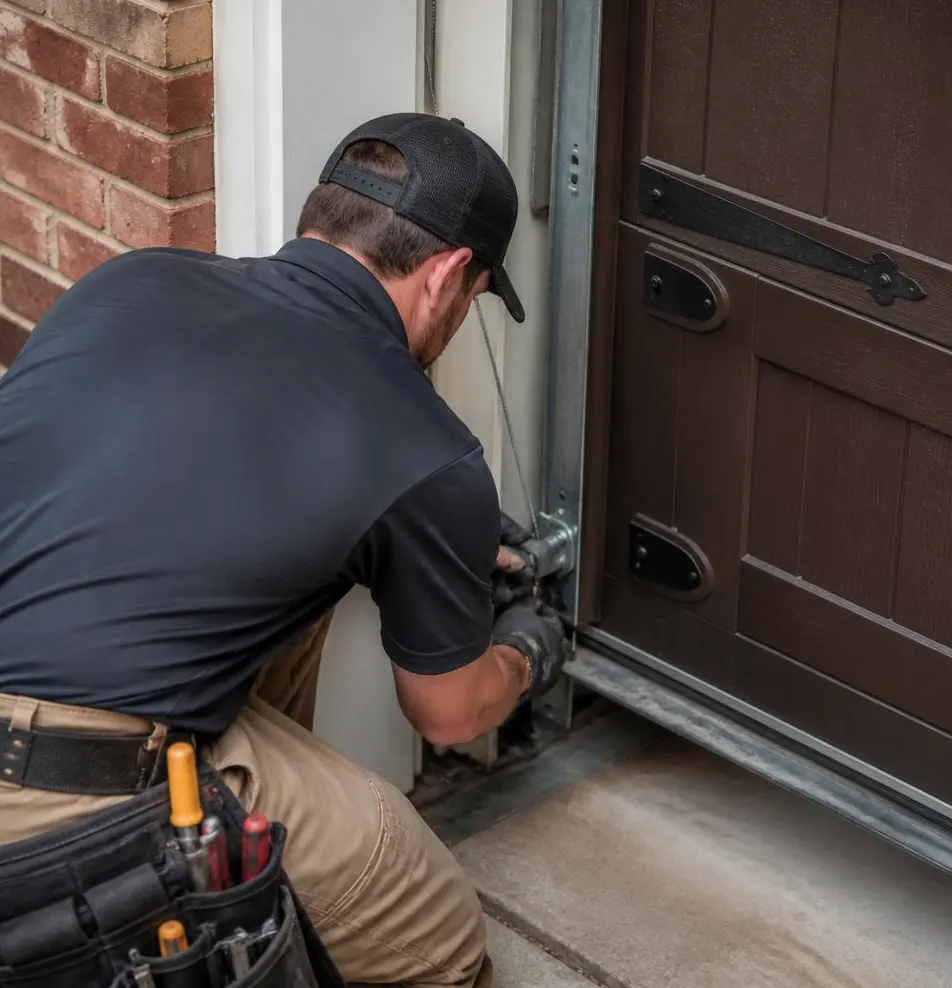
Getting Your Garage Door Ready for Winter in Miami Springs
Winter prep here isn't about frozen tracks or snow-packed sensors. It's about catching the damage hurricane season left behind and adjusting for the drier, cooler air that moves in through December and January. The short version: lubricate moving parts, check hardware for rust and wear, test weatherstripping, and make sure your opener's battery backup actually works. Here's why each step matters and how to do it right.
What Hurricane Season Leaves Behind
By the time the dry season settles in, your garage door has spent months absorbing humidity, salt air, and sudden pressure changes from storms. That combination causes a few predictable problems: wood panels that swelled and may now be shrinking as the air dries out, metal hardware that's started rusting at the edges, and rollers or hinges caked with grime from afternoon downpours. Walk the full door - panels, tracks, springs, cables - and look for anything that wasn't there before summer. Small issues like a slightly bent track or a frayed cable are much cheaper to fix now than after they fail completely.
Lubrication Matters More Than You'd Think
Humid air keeps lubricant from drying out as fast, which means a lot of homeowners skip this step for months at a time. Once drier air arrives, grease and oil on rollers, hinges, and tracks start to thin out and lose effectiveness faster. If your door has started squeaking, grinding, or hesitating partway through its cycle, that's usually the first sign. Use a silicone-based garage door lubricant (not WD-40, which evaporates quickly and attracts dust) on the rollers, hinges, and the track itself. Avoid spraying lubricant directly on the springs unless the product is rated for it - over-lubricating springs can actually attract more grit.
Weatherstripping and Seals
The rubber seal along the bottom of your door and the strips along the sides do double duty here: they keep out the bugs and small critters that are more active as temperatures cool, and they help manage the swings between warm afternoons and cooler mornings. Check for cracking, flattening, or gaps where daylight shows through. If the seal has gone stiff or brittle from months of UV exposure and humidity, it's an inexpensive fix - most hardware stores carry replacement weatherstripping that installs without special tools.
Cooler Mornings and Metal Contraction
South Florida's dry season still brings real temperature swings, especially overnight into early morning when cold fronts pass through. Metal components - tracks, springs, and tension cables - contract slightly in cooler air. If your door was already running on worn springs or a slightly misaligned track, these smaller swings can be enough to push a marginal part into failure. A door that was merely noisy in October can become a door that won't open at all in January. This is the time to have springs and cables inspected, not after they snap.
Opener and Battery Backup
Cold fronts moving through late in hurricane season and into early winter can still bring strong wind and rain, and with it, power outages. If your opener has a battery backup, test it now - don't wait until you're standing in the driveway during a storm. Replace the battery if it's more than a couple of years old, and confirm the remote and keypad still sync properly. If you don't have battery backup, it's worth asking about adding one, especially if your garage door is the main entry point to your home.
Sun Exposure Increases in the Dry Season
With less cloud cover and rain, UV exposure actually goes up during the dry months. If your door is painted steel or wood, check for fading, chalking, or hairline cracks in the finish, particularly on the side that gets the most afternoon sun. A fresh coat of exterior-rated paint or sealant protects against both UV damage and the salt air that drifts inland from the coast. For wood doors, this is also a good time to check for any soft spots where moisture got trapped over the summer.
A Quick Pre-Season Checklist
- Inspect springs, cables, and rollers for rust, fraying, or visible wear
- Lubricate hinges, rollers, and tracks with silicone-based lubricant
- Replace cracked or flattened weatherstripping
- Test the auto-reverse safety feature by placing an object in the door's path
- Check and replace opener battery backup if needed
- Look for fading, cracking, or soft spots in the door's finish
- Tighten any loose bolts or hinges on the track and frame
When to Call Miami Springs Overhead Door Co
If you've gone through the checklist and found rust on the springs, a cable that's starting to fray, or a door that's drifting off its track when it opens and closes, it's time to call in a professional rather than push through it. Our team handles Garage Door Maintenance & Tune-Up visits that cover the full system - springs, cables, rollers, opener, and alignment - so small problems get caught before they turn into a door that won't open at all. If something's already failed, our Cable & Roller Replacement service gets worn parts swapped out quickly, usually in a single visit.
Don't wait for a cold front to find the weak spot in your garage door. Call Miami Springs Overhead Door Co today to schedule a winter tune-up and keep your door running smoothly through the dry season ahead.