
Rule of Thumb First
Most "dead" garage doors aren't dead at all — they're unplugged, unlocked, or blocked by a sensor, and the fix takes five minutes. The exceptions are the ones that feel the same from the driveway but aren't: a snapped spring, a cable off its drum, or a door that's jumped its track. Those look identical to a power problem until you know what to check and in what order.
What the Symptoms Usually Tell You
- Opener makes no sound at all — points to power, not mechanics.
- Opener hums or clicks but the door doesn't move — often a spring or cable issue; the motor is working but the door is too heavy or disconnected from the lift mechanism.
- Door opens a few inches, reverses, or stops — usually sensors or an off-track condition tripping the safety system.
- Door opens by hand but not with the opener — almost always the opener's drive mechanism, not the door itself.
With that in mind, here's the order a technician actually works through.
1. Power to the Opener
Before anything else, confirm the opener is getting electricity. Check that it's plugged in, the outlet works (test it with another device), and no breaker has tripped. In Miami Springs' humid climate, GFCI outlets in garages trip more often than people expect, especially after a heavy afternoon downpour pushes moisture into an outdoor-rated circuit. A tripped GFCI looks exactly like a dead opener.
2. Remote, Wall Switch, and Batteries
Next is the simplest possible failure: a dead remote battery or a wall switch that's lost connection. Try the wall-mounted button directly. If that works but the remote doesn't, it's a battery or reprogramming issue, not a door problem at all.
3. Safety Sensors (Photo Eyes)
If the door starts to close and reverses, or won't close past a certain point, the photo-eye sensors near the bottom of the tracks are the next check. Dust, spiderwebs, humidity fogging the lens, or even direct sunlight hitting one sensor can cause a false reading. Wipe both lenses clean and make sure they're facing each other squarely — moisture swelling in wood-framed garages can shift the mounting bracket just enough to misalign them.
4. The Manual Disconnect (Emergency Release)
Technicians always check whether the red pull cord has been accidentally engaged, which disconnects the door from the opener's trolley. This happens more often than homeowners admit — a bumped cord during storage shuffling, a curious pet, or a prior power outage where someone pulled it to open the door by hand and forgot to reset it. If the opener runs but the door doesn't move, this is a prime suspect.
5. Springs
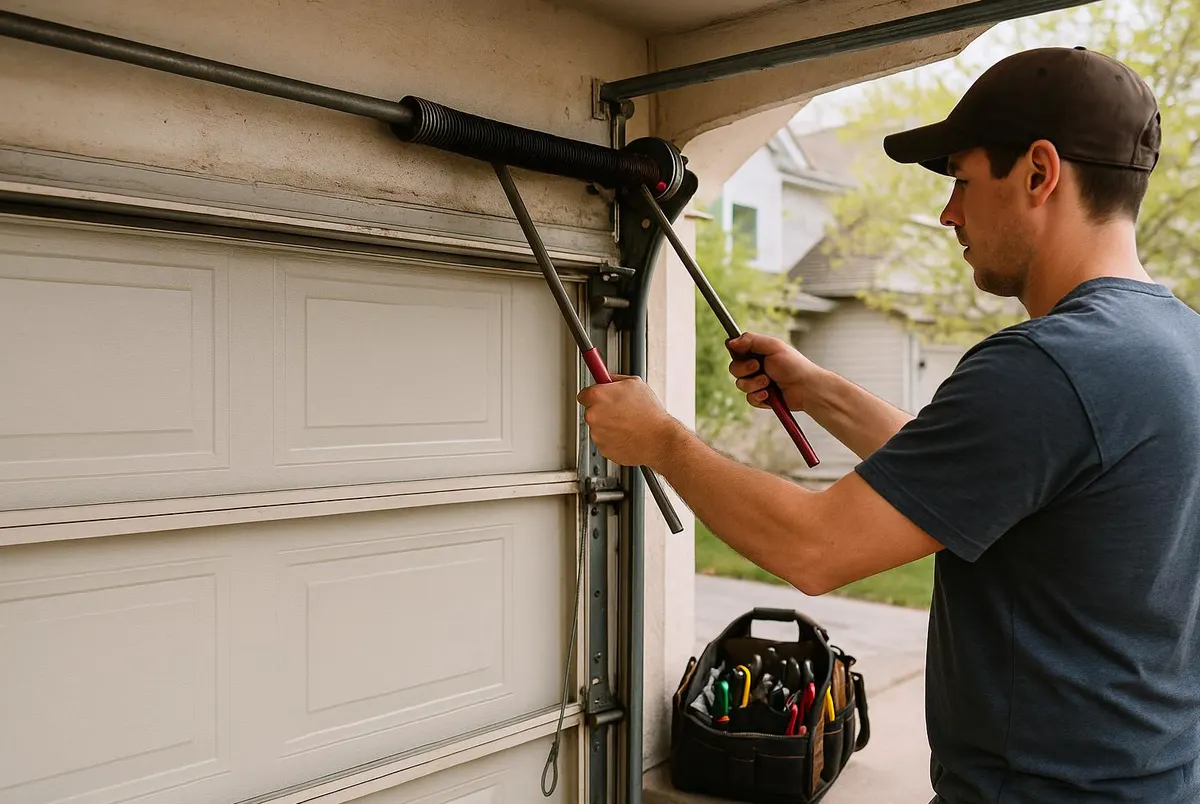
If the opener strains, hums, or trips its own breaker without moving the door, the torsion or extension springs are next. A broken spring means the opener is trying to lift the full weight of the door alone, which it isn't built to do. You may see a visible gap in the torsion spring above the door, or a stretched/broken extension spring along the upper tracks. This is not a DIY repair — springs are under heavy tension and a professional replacement is the only safe route.
6. Cables and Rollers
A cable that's slipped off its drum, frayed, or snapped will let one side of the door hang unevenly or refuse to move altogether. Technicians check cable tension on both sides and inspect rollers for wear, rust, or cracking. Miami Springs' humidity accelerates roller corrosion compared to drier climates, so this is a more common culprit here than in many parts of the country.
7. Off-Track Condition
If the door has visibly shifted out of its tracks — often from a cable failure, a roller giving out, or impact damage — it will bind or stop partway. This is checked visually by tracing the tracks from top to bottom looking for gaps, bends, or a door edge that's no longer flush with the track.
8. Opener Gears and Motor
Last on the list, because it's the least common actual failure, is the opener's internal drive gear or motor. A worn plastic gear (common on older belt and chain-drive units) can strip silently, leaving the motor running with no output. This usually surfaces after years of use, particularly in openers that have run through repeated humid-season swelling and contraction cycles without maintenance.
When to Call Miami Springs Overhead Door Co
If you've confirmed power and the remote works but the door still won't move, stop troubleshooting and call us before you force anything by hand. A door stuck on a broken spring or a slipped cable can drop unexpectedly, and that's a safety risk, not an inconvenience. Our Garage Door Spring Repair and Cable & Roller Replacement services are built around exactly this kind of diagnostic work — we start at the top of this checklist and don't guess at parts.
If your door won't open and you're in Miami Springs, Hialeah, Doral, Miami Lakes, or anywhere nearby, call Miami Springs Overhead Door Co for same day garage door repair. We'll find the actual cause and fix it the same visit.